+86-13615760288
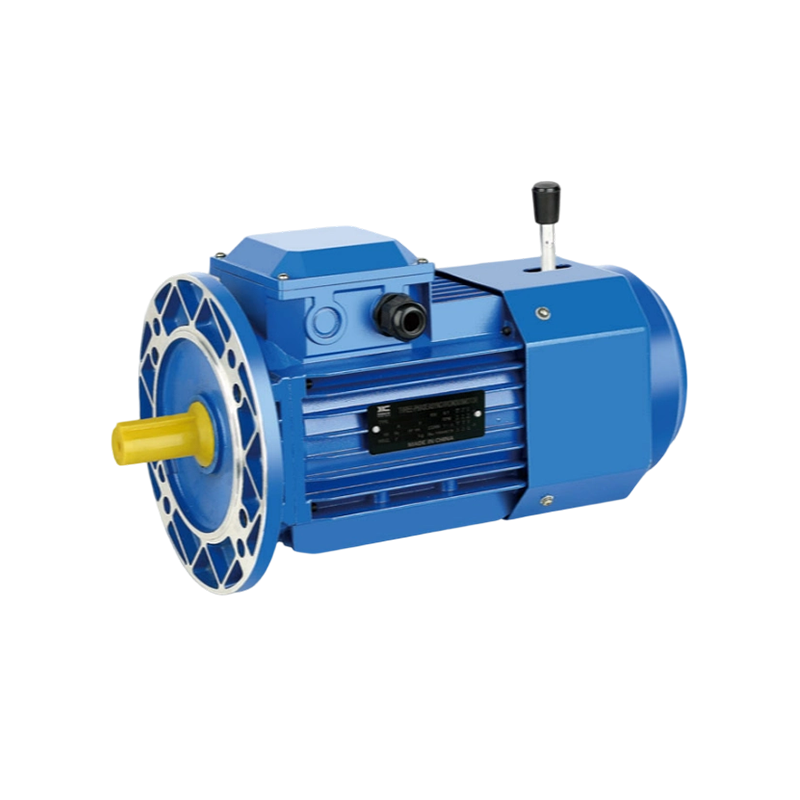
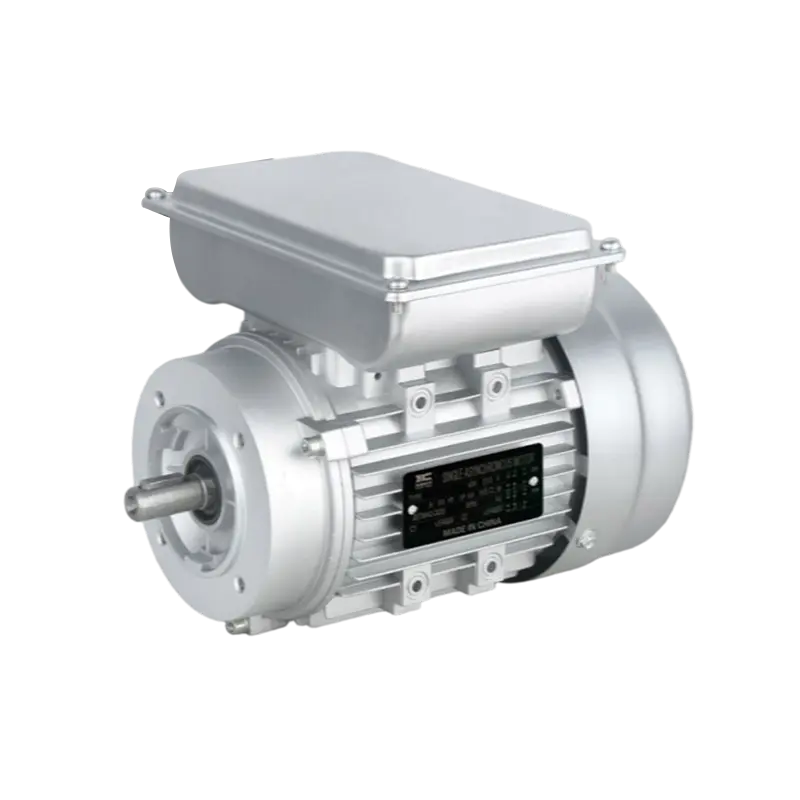
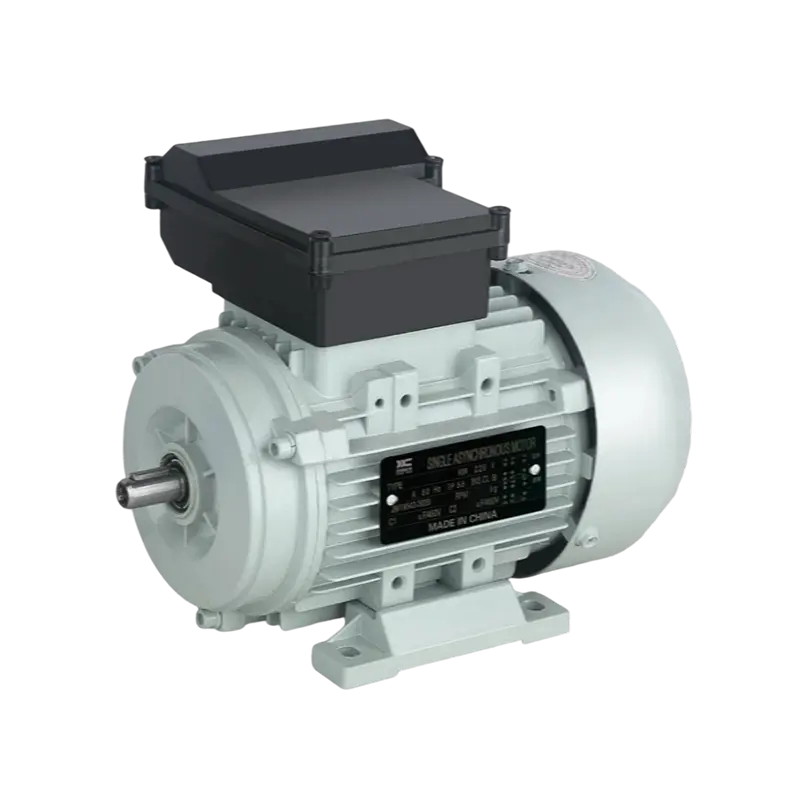
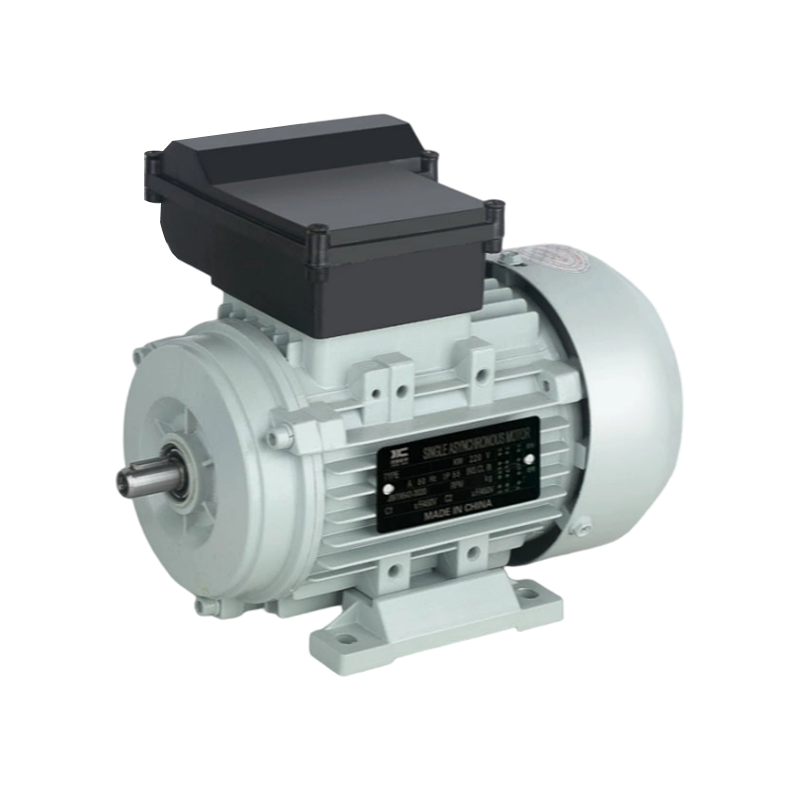
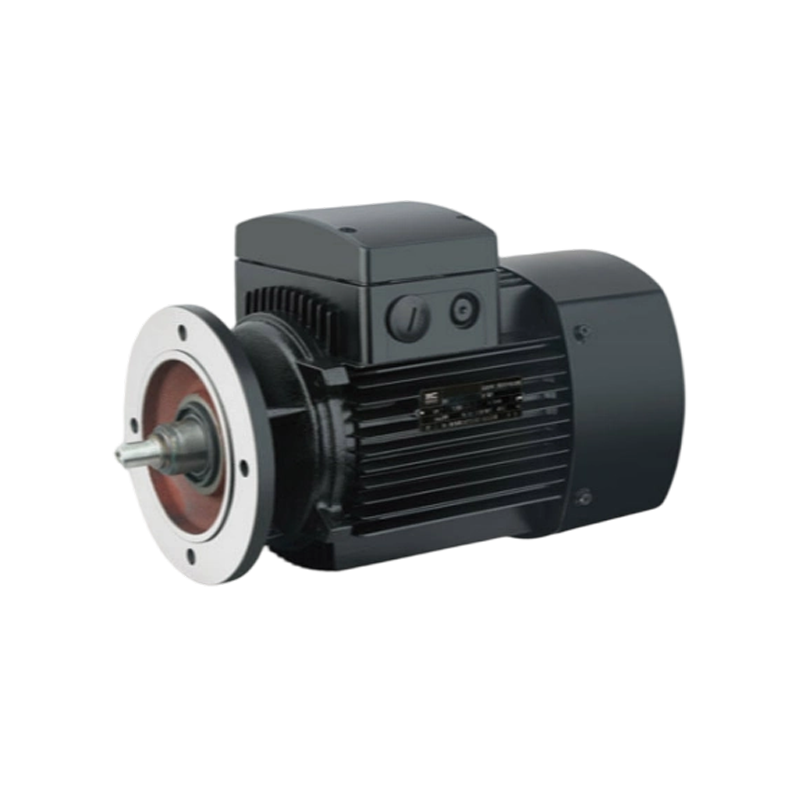
YEJ Brake Motor
Home / Products / Aluminum Shell Motors / YEJ Brake Motor
  • YEJ Brake Motor
  • YEJ Brake Motor
  • Product Details
  • FAQ

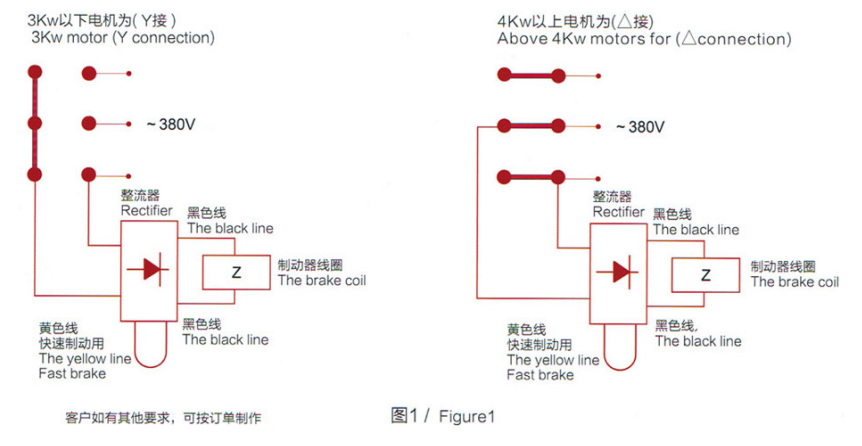
YEJ wiring brake motor method


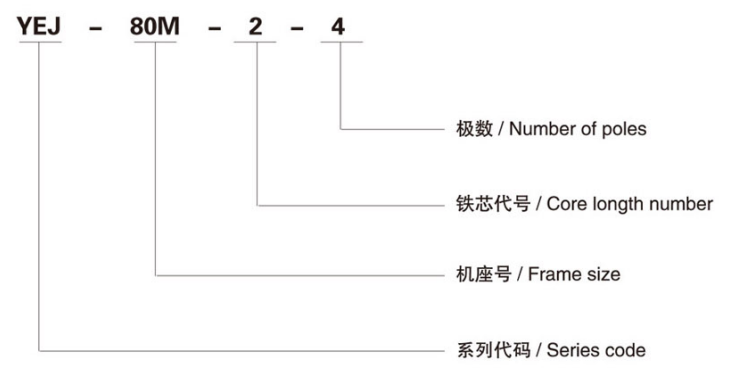
YEJ brake motor code description

3000r/min 380V 50Hz

TYPE Rated
output
Rated
speed
Efficency Power
foctor
Rated
current
Rated
torque
Locked
rotor  torque/Rated torque
Maximum torque/Rated torque Static brake
torque NM/DC
Brake
torquedu ring
idie
S
KW RPM η% COSφ A Nm Ts/Tn Tmax/Tn
YEJ-6312 0.18 2800 65 0.8 0.53 0.61 2.2 2.2 3.5 0.1
YEJ-6322 0.25 2800 68 0.81 0.69 0.85 2.2 2.2 3.5 0.1
YEJ-7112 0.37 2830 70 0.81 0.99 1.25 2.2 2.2 4 0.1
YEJ-7122 0.55 2830 73 0.82 1.4 1.86 2.2 2.3 4 0.1
YEJ-8012 0.75 2840 75 0.83 1.83 2.52 2.2 2.3 7.5 0.1
YEJ-8022 1.1 2840 77 0.84 2.55 3.7 2.2 2.3 7.5 0.1
YEJ-90S-2 1.5 2840 79 0.84 3.39 5.04 2.2 2.3 15 0.15
YEJ-90L-2 2.2 2840 81 0.85 4.8 7.4 2.2 2.3 15 0.15
YEJ-100L-2 3 2860 83 0.87 6.31 10 2.2 2.3 30 0.15
YEJ-112M-2 4 2880 85 0.88 8.22 13.3 2.2 2.3 40 0.15
YEJ-132S1-2 5.5 2910 86 0.88 11.2 18 2.2 2.3 80 0.15
YEJ-132S2-2 7.5 2910 87 0.88 15.1 24.6 2.2 2.3 80 0.15
YEJ-160M1-2 11 2930 88 0.89 21.3 35.9 2.2 2.3 150 0.3
YEJ-160M2-2 15 2930 89 0.89 28.8 48.9 2.2 2.3 150 0.3
YEJ-160L-2 18.5 2935 90 0.9 34.7 60.2 2.2 2.3 150 0.3
YEJ-180M-2 22 2935 90 0.9 41.3 71.6 2.2 2.3 200 0.3

1500r/min 380V 50Hz

TYPE Rated
output
Rated
speed
Efficency Power
foctor
Rated
current
Rated
torque
Locked
rotor  torque/Rated torque
Maximum torque/Rated torque Static brake
torque NM/DC
Brake
torquedu ring
idie
S
KW RPM η% COSφ A Nm Ts/Tn Tmax/Tn
YEJ-6314 0.12 1360 57 0.72 0.44 0.84 2.2 2 3.5 0.1
YEJ-6324 0.18 1360 60 0.73 0.62 1.26 2.2 2 3.5 0.1
YEJ-7114 0.25 1375 65 0.74 0.79 1.74 2.2 2 4 0.1
YEJ-7124 0.37 1375 67 0.75 1.12 2.57 2.2 2 4 0.1
YEJ-8014 0.55 1405 71 0.75 1.57 3.74 2.2 2.4 7.5 0.1
YEJ-8024 0.75 1405 73 0.76 2.02 5.1 2.2 2.4 7.5 0.1
YEJ-90S-4 1.1 1445 75 0.77 2.82 7.27 2.2 2.3 15 0.15
YEJ-90L-4 1.5 1445 78 0.79 3.7 9.91 2.2 2.3 15 0.15
YEJ-100L1-4 2.2 1440 80 0.81 5.16 14.6 2.2 2.3 30 0.15
YEJ-100L2-4 3 1440 82 0.82 6.78 19.9 2.2 2.3 30 0.15
YEJ-112M-4 4 1440 84 0.82 8.82 26.5 2.2 2.3 40 0.15
YEJ-132S1-4 5.5 1440 85 0.83 11.7 36.5 2.2 2.3 80 0.15
YEJ-132S2-4 7.5 1440 87 0.84 15.6 49.7 2.2 2.3 80 0.15
YEJ160M1-4 11 1450 88 0.85 21.3 72.4 2.2 2.2 150 0.3
YEJ160M2-4 15 1450 89 0.85 30..1 98.8 2.2 2.2 150 0.3
YEJ-180M-4 18.5 1455 90.5 0.86 36.5 121.4 2.2 2.2 150 0.3
YEJ-180L-4 22 1455 91 0.86 43.1 144.4 2 2.2 200 0.3


1000r/min  380V  50Hz

TYPE Rated
output
Rated
speed
Efficency Power
foctor
Rated
current
Rated
torque
Locked
rotor torque/Rated  torque
Maximum torque/Rated torque Static brake
torque NM/DC
Brake
torquedu ring
idie
S
KW RPM n% COSφ A Nm Ts/Tn Tmax/Tn
YEJ-7116 0.18 900 56 0.66 0.71 19.1 1.9 2 4 0.1
YEJ-7126 0.25 900 59 0.68 0.95 2.65 1.9 2 4 0.1
YEJ-8016 0.37 910 62 0.7 1.3 3.88 1.9 2 7.5 0.1
YEJ-8026 0.55 910 65 0.72 1.79 5.77 1.9 2.1 7.5 0.1
YEJ-90S-6 0.75 930 69 0.72 2.26 7.7 2.1 2.1 15 0.15
YEJ-90L-6 1.1 940 72 0.73 3.14 11.2 2.1 2.1 15 0.15
YEJ-100L-6 1.5 940 76 0.76 3.95 15.2 2.2 2.1 30 0.15
YEJ-112M-6 2.2 960 79 0.76 5.57 21.9 2.2 2.1 40 0.15
YEJ-132S-6 3 960 81 0.76 7.4 29.8 2.2 2.1 80 0.15
YEJ132M1-6 4 960 82 0.76 9.63 39.8 2.2 2.1 80 0.15
YEJ132M2-6 5.5 960 84 0.77 12.9 54.7 2.2 2.1 150 0.3
YEJ160M-6 7.5 970 86 0.77 17 73.8 1.8 2.1 150 0.3
YEJ160L-6 11 970 87.5 0.78 24.3 108.3 1.9 2.1 150 0.3
YEJ-180L-6 15 970 89 0.81 31.6 147.7 2.1 2.1 200 0.3


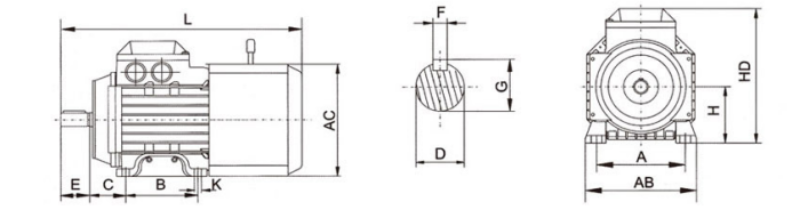
IM B3 H63-180

Frame size Installation Dimensions
A B C D E F G H K AB AC HD L
63 100 80 40 φ11 23 4 12.5 63 φ7 135 120X120 167 255
71 112 90 45 φ14 30 5 16 70 φ7 137 130X130 178 305
80M 125 100 50 φ19 40 6 21.5 80 φ10 155 145X145 190 340
90S 140 100 56 φ24 50 8 27 90 φ10 175 160X160 205 400
90L 140 125 56 φ24 50 8 27 90 φ10 175 160X160 205 400
100L 160 140 63 φ28 60 8 31 100 φ12 200 185X185 240 440
112M 190 140 70 φ28 60 8 31 112 φ12 230 200X200 270 480
132S 216 140 89 φ38 80 10 41 132 φ12 270 245X245 315 567
132M 216 178 89 φ38 80 10 41 132 φ12 270 245X245 315 567
160M 254 210 108 φ42 110 12 45 160 φ14.5 320 335X335 450 780
160L 254 254 108 φ42 110 12 45 160 φ14.5 320 335X335 450 780
180M 279 241 121 φ48 110 14 51.5 180 φ14.5 355 370X370 500 880
180L 279 279 121 φ48 110 14 51.5 180 φ14.5 355 370X370 500 880


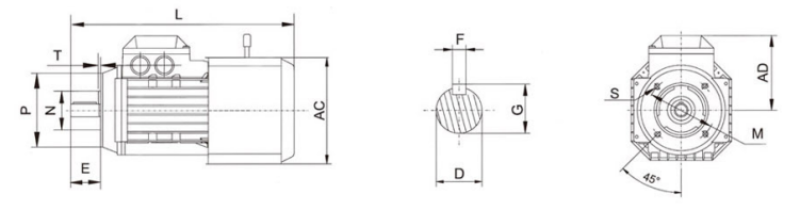
IM B14 H63-112

Frame size Installation Dimensions
D E F G M N P S T AC AD L
63 φ11 23 4 12.5 75 60 90 M5 2.5 120X120 104 255
71 φ14 30 5 16 85 70 105 M6 2.5 130X130 107 305
80 φ19 40 6 21.5 100 80 110 M6 3 145X145 115 340
90S φ24 50 8 27 115 95 120 M8 3 160X160 122 400
90L φ24 50 8 27 115 95 120 M8 3 160X160 122 400
100L φ28 60 8 31 130 110 155 M8 3.5 185X185 137 440
112M φ28 60 8 31 130 110 160 M8 3.5 200X200 155 480


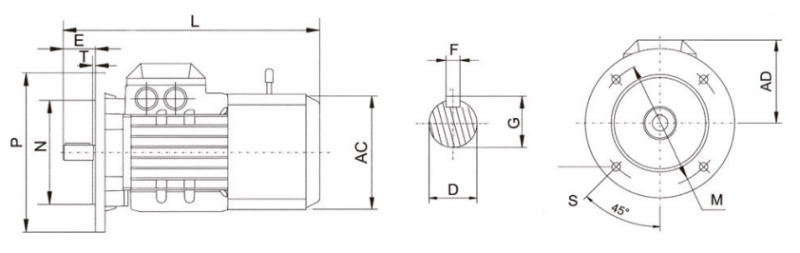
IM B5 H63-180

Frame size Installation Dimensions
D E F G M N P S T AC AD L
63 φ11 23 4 12.5 115 95 140 10 3 120X120 104 255
71 φ14 30 5 16 130 110 160 10 3 130X130 107 305
80M φ19 40 6 21.5 165 130 200 12 3.5 145X145 115 340
90S φ24 50 8 27 165 130 200 12 3.5 160X160 122 400
90L φ24 50 8 27 165 130 200 12 3.5 160X160 122 400
100L φ28 60 8 31 215 180 250 14.5 4 185X185 137 440
112M φ28 60 8 31 215 180 250 14.5 4 200X200 155 480
132S φ38 80 10 41 265 230 300 14.5 4 245X245 180 567
132M φ38 80 10 41 265 230 300 14.5 4 245X245 180 567
160M φ42 110 12 45 300 250 350 18.5 5 320X320 290 780
160L φ42 110 12 45 300 250 350 18.5 5 320X320 290 780
180M φ48 110 14 51.5 300 250 350 18.5 5 360X360 340 880
180L φ48 110 14 51.5 300 250 350 18.5 5 360X360 340 880
Message Feedback
About
Zhejiang Lixiang Electromechanical Co., Ltd.
Zhejiang Lixiang Electromechanical Co., Ltd. is a small and medium-sized motor manufacturing enterprise that integrates design, production, research and development, sales, and service. The company possesses advanced production equipment and a team of capable technical personnel. With scientific management methods and strong operational capabilities, it continues to advance steadily in the competitive market.
These motors are widely used in industries including food processing, textiles, papermaking, packaging, ceramics, chemicals, livestock machinery, woodworking, and agricultural water conservancy. The products are well-received and sold across multiple provinces and cities nationwide.
News

Brake Motors Explained – Three-Phase Asynchronous Design and Efficiency Classes

What is a Brake Electric Motor and How it Works?

A brake electric motor is a regular AC or DC motor with a braking system installed on the shaft. When power is cut brake is applied and the load is quickly stopped and held in position. These you will find on hoists, cranes, conveyors and anywhere that gravity or inertia could cause undesirable movement after shutdown.

How the Brake Functions

The industrial brake motor is mostly of the spring-applied, electromagnetic release type. The order is:

  • Power on: A DC coil energises a magnetic field that pulls the brake armature away from the friction disc, compressing the release springs. The brake is released and the motor runs free.
  • Power down: Magnetic field vanishes. Almost immediately, the springs push the armature back against the friction disc clamping the shaft and stopping rotation.

The brake assembly is mounted on the non-drive end of the motor. It is a small unit. It uses the same power supply the motor uses, so this simplifies wiring and control logic.

Types of Brake Motors

Type How It Works Best For
Electromagnetic (spring-set) Springs apply brake; electromagnet releases it Most industrial applications—hoists, conveyors, positioning systems
Electromagnetic (permanent magnet) Permanent magnets apply braking force; coil releases it Smaller motors, battery-powered equipment
Permanent magnet DC brake Magnets hold brake released; coil applies it Emergency stop systems, fail-safe applications

Key Selection Points

  • Response time. Standard electromagnetic brakes engage in about 50–100 milliseconds. Faster options exist for precision work.
  • Torque rating. The brake's holding torque should exceed the motor's peak torque—typically 150–200% of rated torque.
  • Duty cycle. Frequent braking generates heat. Choose a brake rated for your expected starts/stops per hour.
  • Adjustability. Many brakes have an adjustable air gap. As friction material wears, the gap increases—regular adjustment keeps performance consistent.

When to use a brake motor: Overhead cranes, incline conveyors, elevators, and indexing tables are textbook examples.

Advantages of Three-Phase Asynchronous Motors Over Other Types

Three-phase asynchronous motors—induction motors—dominate industry for good reason. They hit a sweet spot of reliability, simplicity, and cost that no other motor type matches.

Simple and Strong

The rotor has no electrical connections, no brushes, no slip rings (in the standard squirrel-cage version). The rotor is simply laminated steel with cast aluminium or copper bars. This design is better able to cope with dust, moisture and vibration than DC motors or synchronous machines.

Low Maintenance

No wearing electrical contacts means maintenance amounts to bearing lubrication and occasional cleaning. DC motors need brush replacement every few thousand hours and commutator skimming. The lifecycle cost difference is substantial.

High Power-to-Weight Ratio

Three-phase motors deliver more torque per frame size than single-phase motors. Three-phase power produces a natural, self-starting rotating magnetic field without capacitors or starting switches.

Speed Control is Now Practical

Variable frequency drives changed the game entirely. With a VFD, an asynchronous motor delivers smooth speed control from near-zero to well above base speed. Sensorless vector drives provide 100% torque at zero speed—once exclusive to DC motors.

Cost Effectiveness

Three-phase motors cost less to manufacture than DC motors. The rotor is far cheaper than a wound DC armature. Combined with lower maintenance, total cost of ownership favors three-phase induction in nearly every continuous-duty industrial application.

Feature Three-Phase Induction DC Motor Single-Phase Induction
Brushes? No Yes No
Rotor windings? Cast bars only Wound and commutated Cast bars only
Starting torque Moderate to high High Moderate
Speed control Excellent with VFD Good Limited
Maintenance Bearing only Brushes + bearings Bearing only
Typical cost Moderate High Low

Where They Fall Short

Starting torque is lower than DC in some configurations, and efficiency drops at partial loads. That's why they're rarely used in traction applications or servo systems.

Typical Efficiency of High Efficiency Different power classes of three-phase motors

Motor efficiency matters. Every wasted watt is heat. Heat that must be removed. Heat that shortens insulation life. Heat that costs money twice.

Efficiency Classes Defined

International standards (IEC 60034-30) define four classes:

  • IE1 (Standard) — The baseline. Increasingly irrelevant in regulated markets.
  • IE2 (High) — Minimum for many new installations.
  • IE3 (Premium) — Baseline for most new motors in the EU and increasingly in the US.
  • IE4 (Super Premium) — Top tier. Requires higher-grade materials and tighter manufacturing.

Efficiency by Power Level (IE3, 4-Pole, 50/60 Hz)

Power (kW) Efficiency (%) Power (HP) Efficiency (%)
0.75 kW 80.7% 1 HP 82.5%
1.1 kW 82.7% 1.5 HP 84.1%
1.5 kW 84.2% 2 HP 85.0%
2.2 kW 85.9% 3 HP 86.8%
3.7 kW 87.7% 5 HP 88.4%
5.5 kW 89.1% 7.5 HP 89.6%
7.5 kW 90.1% 10 HP 90.2%
11 kW 91.2% 15 HP 91.2%
15 kW 91.8% 20 HP 91.8%
18.5 kW 92.2% 25 HP 92.4%
22 kW 92.6% 30 HP 92.7%
30 kW 93.1% 40 HP 93.0%
37 kW 93.4% 50 HP 93.2%

What This Means

A 30 kW IE3 motor (93.1% efficient) loses about 2.07 kW. The same motor at IE1 (roughly 90.0%) loses 3.0 kW. That 0.93 kW difference, over 8,000 hours per year, adds up to about 7,440 kWh—or $750–$1,000 annually depending on local rates.

Efficiency at Partial Load

Efficiency peaks at 75–100% of rated load. At 50% load, it drops 1–3 points. At 25%, the drop is more significant—5–8 points. For variable loads, consider sizing closer to the average load, or look at IE4 with flatter efficiency curves.

Load Level IE3 Efficiency (30 kW) IE4 Efficiency (30 kW)
100% 93.1% 94.2%
75% 93.0% 94.1%
50% 91.8% 93.0%
25% 88.5% 90.2%

When to Upgrade to IE4

IE4 carries a 20–40% premium over IE3. Payback depends on run hours and electricity costs:

  • 8,000+ hours/year: IE4 pays back in 2–4 years.
  • 4,000–8,000 hours/year: IE4 pays back in 3–6 years.
  • Under 4,000 hours/year: Stick with IE3 unless energy is extremely expensive.