


 English
 中文简体
中文简体 русский
 Español

 +86-13615760288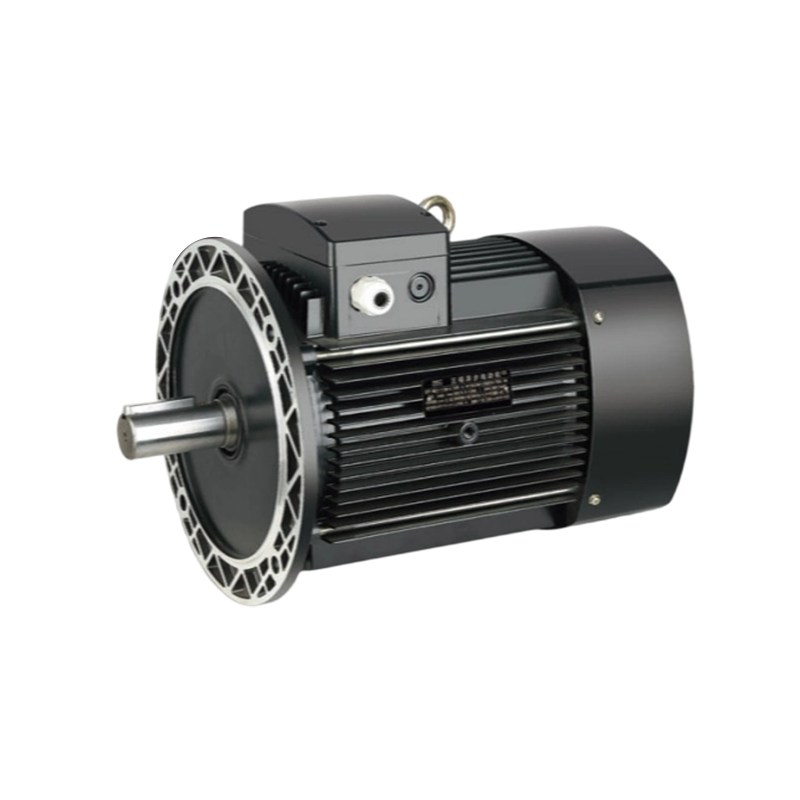
The Motor Builder's Guide: Aluminum Housings, Motor Applications, and VFD Compatibility
What is the primary advantage of using Square aluminum for motor housings?
Walk through our plant. Square aluminum housings are everywhere. There's a reason.
Structural Rigidity and Thermal Performance
The square profile gives us better structural rigidity than round housings with the same wall thickness. Flat surfaces and sharp corners act as natural stiffeners. When a motor sees vibration or shock loads, the housing holds shape. Bearings stay aligned. Service life extends measurably.
Heat dissipation is where square aluminum truly shines. Flat faces give us more surface area for heat transfer. The extrusion process lets us add integral cooling fins on all four sides. Aluminum's thermal conductivity—237 W/m·K versus cast iron's 52 W/m·K—moves heat away from windings fast. Every 10°C reduction in winding temperature doubles insulation life. That's proven in the field, not just theory.
Mounting Flexibility
Square housings mount on any of four sides. In tight OEM applications, that flexibility is gold. You're no longer locked into a single orientation. Need to rotate the motor 90 degrees to fit the machine layout? No problem. No custom brackets required.
Key advantages we see in the field:
- Superior rigidity-to-weight ratio
- Excellent heat dissipation from flat surfaces
- Four-sided mounting capability
- Significant weight reduction versus cast iron
- Corrosion resistance without painting
Square aluminum isn't universal. For motors above 50 HP, cast iron's vibration-damping becomes advantageous. In extreme chemical environments, stainless steel remains the standard. But for 1-50 HP industrial motors? Square aluminum delivers the best combination of cost, performance, and installability.
What are the applications of small AC electric motors?
Fractional-horsepower AC motors—under 1 HP—are the unsung heroes of modern facilities. They run continuously, often unnoticed, until they fail. Then everyone notices.
HVAC Systems
Condenser fan motors, air handler blowers, and damper actuators all depend on small AC motors. These applications demand continuous duty reliability. A failed condenser fan on a 95°F day can shut down an entire cooling system. Production stops. People get uncomfortable. We design these motors for 40,000+ hours of continuous operation.
Commercial Equipment
Supermarkets rely on dozens of small motors. Conveyor belts at checkout. Refrigeration compressors. Automatic doors. Vending machines. These motors see thousands of start-stop cycles. They need consistent starting torque and quiet operation. Noise matters when you're trying to maintain a pleasant shopping environment.
Medical and Laboratory
Blood centrifuges. Laboratory shakers. Blood analyzers. Medical applications demand precision and absolute reliability. Shaded-pole motors are common here. Simple construction. Low EMI emissions. Predictable performance. In medical settings, failure is not an option.
Automotive and Industrial
Electric vehicles use small AC motors in HVAC blowers and battery cooling fans. In factories, they power valve actuators, lubrication pumps, and control cabinet cooling fans. These applications prioritize continuous operation at low noise levels with minimal maintenance.
Common applications:
- HVAC: Condenser fans, blowers, damper actuators
- Commercial: Conveyor belts, refrigeration, automatic doors
- Medical: Centrifuges, analyzers, lab shakers
- Automotive: EV cooling fans, HVAC blowers
- Industrial: Valve actuators, lubrication pumps, cabinet cooling
Can AC asynchronous motors be used with variable frequency drives (VFD)?
This question surfaces in every specification meeting. The answer is yes—but proper engineering is essential.
Operational Benefits
VFD operation enables continuous, precise speed control. Energy savings follow the affinity laws. A fan at 80% speed consumes roughly 50% less power. Soft starting reduces mechanical stress on belts, couplings, and bearings. We see these benefits daily in our customers' facilities.
Design Requirements for VFD Duty
Standard induction motors can operate on VFDs, but inverter-duty designs are engineered for longevity:
- Insulation systems rated for voltage spikes (Class F or H minimum)
- Shaft grounding to prevent bearing currents
- Reinforced winding connections that resist vibration
- Separate cooling fans for low-speed operation
The Cooling Issue
At reduced speeds, shaft-mounted fans slow proportionally. At 50% speed, cooling airflow drops approximately 80%. The motor continues generating significant heat. Without addressing this, winding temperatures rise rapidly. Insulation degrades faster. Field experience shows standard motors on VFDs often fail within 6-12 months without proper cooling provisions.
Solutions:
- Auxiliary blower independent of shaft speed
- Wide-speed-range motors (10:1 or 1000:1 ratio)
- Duty cycle management—limiting low-speed operation
Voltage Spikes and Harmonics
VFD PWM output creates voltage reflections, particularly with long cable runs. Reflections can produce spikes up to twice the DC bus voltage. A 460V drive may deliver 800V+ surges. Inverter-duty motors feature phase-to-phase and phase-to-ground insulation that withstands these conditions.
Harmonics from VFDs cause voltage distortion, transformer overheating, and control interference. Line reactors or DC chokes mitigate these effects. For large installations, active front-end drives reduce harmonic content substantially.
Reference Table
| Motor Type | VFD Compatibility | Recommended Action |
| Standard induction motor | Limited | Only for intermittent low-speed use; monitor temperature |
| Inverter-duty (general purpose) | Good | Suitable for most VFD applications |
| Inverter-duty (wide speed range) | Excellent | 10:1 or 1000:1 speed ranges with auxiliary cooling |
| Washdown-rated inverter duty | Excellent | For food processing and wet environments |


