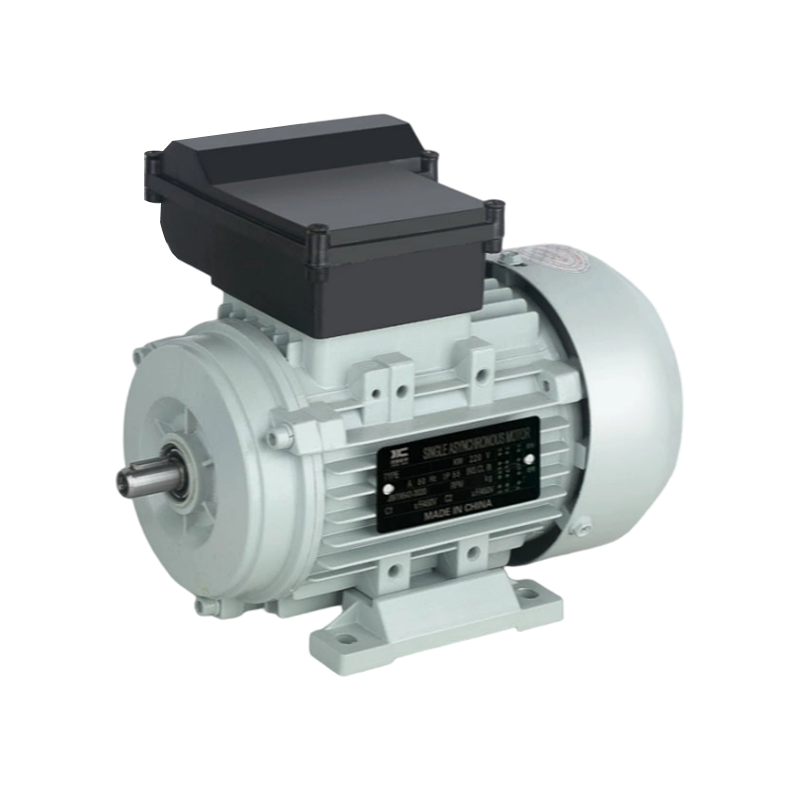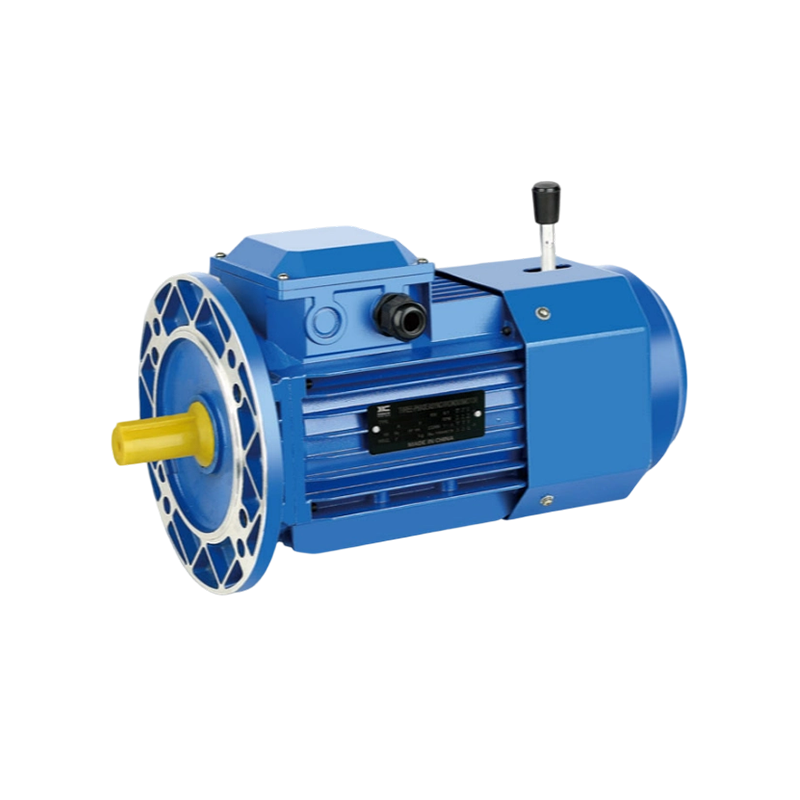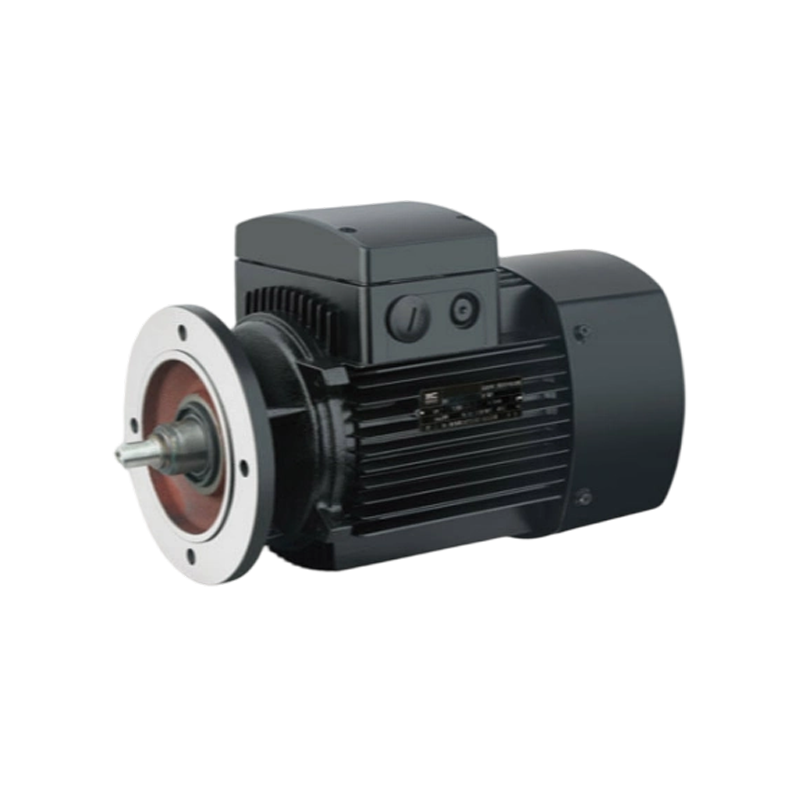

Today, the motor market is increasingly dominated by permanent magnet motors. This trend is not accidental—brushless permanent magnet motors continue to grow rapidly and are expected to maintain this momentum for many years. Although electric motors were invented more than a century ago, permanent magnet motors only became truly practical after the development of high-performance magnetic materials.
Early permanent magnet motors relied on simple bar magnets. Unfortunately, these magnets were of poor quality and unsuitable for industrial applications. This limitation encouraged inventors to experiment with magnets of different sizes, shapes, structures, and materials, ultimately leading to the powerful and compact permanent magnets used in modern motors.
Permanent Magnets: The First Electric Motors
The earliest rotating motors—later known as electric motors—were based on permanent magnets. However, these early machines differed significantly from modern electric motors. One of the pioneers in this field was Michael Faraday, who built what is widely regarded as the first electric motor. Drawing on Hans Christian Ørsted’s discovery that electric currents generate magnetic fields, and William Wollaston’s experiments with current-carrying wires, Faraday constructed a laboratory device that converted electrical energy into rotational mechanical motion.
His motor used fixed and rotating permanent magnets, conductive wires, a mercury bath, and a battery. When current flowed through the circuit, the resulting electromagnetic field interacted with the permanent magnet, producing torque and rotational motion.
Following Faraday’s invention, other innovators refined motor designs. In 1822, Peter Barlow introduced the “Barlow wheel,” a rotating device in which a wheel’s spokes dipped into mercury to create motion when voltage was applied.
Electromagnets: A Turning Point for Motor Development
Despite their early use, permanent magnet motors soon revealed serious limitations in high-power applications. In the 19th century, engineers recognized that electromagnets offered far greater control and power density. British inventor William Sturgeon developed the first electromagnet in 1825, laying the foundation for electromagnetic motors.
In 1827, Hungarian inventor Ányos Jedlik built an early rotating motor using an electromagnet and commutator. Later, in 1834, Moritz Hermann Jacobi introduced the first practical electromagnetic DC motor, capable of lifting loads and producing measurable mechanical power. Jacobi himself acknowledged that his work built upon earlier inventions by Botto and Dal Negro.
Electromagnetic DC motors gained widespread use in the late 19th century, when direct current was the dominant power source. This dominance was challenged in 1889, when Nikola Tesla invented the AC induction motor. AC motors featured a simpler structure consisting of a stator and rotor and relied on a rotating magnetic field generated by multiphase alternating currents. While AC motors offered structural simplicity, early control limitations allowed DC motors to remain prevalent in industrial applications for decades.
The Return of Permanent Magnet Motors
Until the early 20th century, permanent magnet materials were limited mainly to naturally occurring magnetite. Significant progress began with the discovery of new magnetic alloys, including carbon steel, cobalt steel, and tungsten steel. However, these materials still lacked sufficient magnetic strength.
A major breakthrough came with the development of Alnico magnets in the 1930s. Composed primarily of aluminum, nickel, cobalt, and iron, Alnico magnets were produced through advanced metallurgy techniques and were far stronger than earlier materials. In the 1950s, ferrite permanent magnets emerged and were widely adopted in small household appliances.
The next major leap occurred in the 1960s with the invention of rare-earth cobalt magnets, followed by neodymium–iron–boron (NdFeB) magnets in the 1980s. These materials offered unprecedented magnetic energy density, enabling compact, efficient motor designs. Brushless DC permanent magnet motors became commercially viable in the 1970s, supported by advancements in power electronics and electronic commutation technology.
The Future: Nanocomposite Permanent Magnets
The future of permanent magnet motors remains promising as demand continues to grow across emerging applications. One of the most exciting developments is the advancement of nanocomposite permanent magnets. These engineered magnetic materials—sometimes referred to as metamaterials—combine hard and soft magnetic phases at the nanoscale to achieve superior magnetic performance.
Currently, nanocomposite magnets are used in fields such as biomedicine, data storage, magnetic separation, sensors, catalysts, and pigments. As material science continues to advance, these next-generation magnets may play a key role in the future evolution of high-performance permanent magnet motors.
Your email address will not be published. Required fields are marked*
We aim to provide the market and the customers with
high-quality products and customized solutions.
 Zhaoyang Industrial Zone, Daxi Town, Wenling City, Taizhou City, Zhejiang Province, China
 +86-13615760288
  +86-576-86398088


 English
 中文简体
中文简体 русский
 Español